
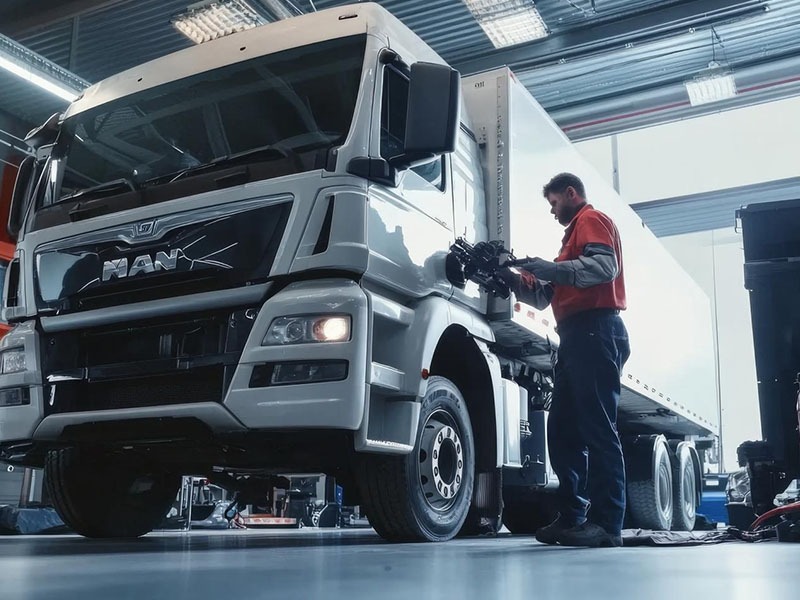
Every fleet manager has a version of the same story. A vehicle comes in for what seems like a straightforward fix — a brake issue, an engine warning light, something minor. A week later it’s back for something else. Then something else again. The repairs keep coming, the costs keep climbing, and nobody can quite explain why the fleet always seems to be one problem away from running smoothly.
The answer, more often than not, isn’t bad luck. It’s a pattern of decisions — about when to repair, how to repair, and what to do between repairs — that quietly makes everything more expensive than it needs to be.
The Repair Trap Most Fleet Operators Fall Into
There’s a mindset that treats auto repair as the main event and everything else as optional extras. Something breaks, you fix it, done. The problem with that approach is that it ignores everything that happens between failures — which is exactly where costs are either controlled or lost.
Reactive repair is the most expensive way to run a fleet. Not because individual repairs cost more in isolation, but because of everything that comes with them. The unplanned downtime. The urgently sourced parts. The ripple effect on routes and schedules. The driver sitting idle. The customer call that has to be made explaining why the delivery is late.
None of that shows up on a repair invoice. But it’s all part of the real cost of fixing things only after they break.
What Auto Maintenance Has to Do With Auto Repair Costs
Here’s the connection that doesn’t get made often enough: most auto repair bills are partially a maintenance story.
Not all of them — some failures are genuinely unpredictable. But a significant portion of what ends up on repair invoices started as something smaller that wasn’t caught during routine auto maintenance. A belt that was showing wear. A fluid that had degraded past the point of doing its job properly. A brake component that had a few thousand more kilometers left but not as many as the next service interval assumed.
Good auto maintenance doesn’t just keep vehicles running between repairs. It directly reduces how much repair is needed in the first place — and changes the nature of the repair that does happen from emergency to planned.
The difference between those two categories is substantial:
- Planned repair happens at a scheduled time, with the right parts ready, at a workshop that has the vehicle’s full history. It fits around operations and costs what it should cost.
- Emergency repair happens when the vehicle decides, not when the business decides. Parts get sourced urgently. Labor gets pulled from other jobs. The vehicle is unavailable when it was supposed to be working. Costs are higher and the operational impact is worse.
Consistent auto maintenance shifts the balance steadily toward planned repair. Over a fleet of any size, that shift is worth real money.
The Most Common Auto Repair Situations That Maintenance Prevents
Some repair patterns show up constantly across fleet operations — not because they’re unavoidable, but because they follow directly from maintenance gaps. Recognizing them is the first step to breaking the cycle.
Brake System Repairs
Brake repairs are among the most frequent fleet expenses, and a large portion of them are preventable. Pad wear that goes unmonitored damages rotors. Rotor damage that goes unaddressed damages calipers. What starts as a pad replacement — a straightforward, affordable job — becomes a full brake system repair because nobody caught the wear in time.
Engine Damage From Fluid Neglect
Engine oil degrades over time and loses its ability to lubricate and protect. Coolant breaks down and becomes less effective at managing heat. When these fluids aren’t monitored and changed on schedule, the damage accumulates quietly until it shows up as an engine repair that costs far more than the fluid changes would have.
Suspension and Steering Wear
UAE road conditions — particularly on highways between emirates and in areas with construction traffic — put consistent stress on suspension components. Regular inspections catch wear on bushings, joints, and shocks before they develop into steering problems or tire wear patterns that compound the cost.
Electrical Faults
Modern vehicles carry complex electrical systems that develop faults gradually. Early diagnosis during routine auto maintenance services catches these when they’re still relatively simple to address. Left alone, electrical issues become harder to trace and more expensive to fix.
Tire-Related Failures
Underinflated tires, misaligned wheels, and uneven wear patterns all lead to premature tire replacement and, in worse cases, blowouts. Tire management as part of regular auto maintenance services prevents most of this — and in the UAE’s summer heat, where tire pressure fluctuates significantly with temperature, monitoring it consistently matters more than in most climates.
Auto Maintenance Services: What a Proper Program Actually Looks Like
The difference between auto maintenance that genuinely reduces repair costs and maintenance that just goes through the motions usually comes down to how comprehensive and consistent it is.
Auto maintenance services that actually protect a fleet cover:
- Engine servicing — oil, filters, diagnostics, spark plugs, and performance checks that catch issues before they affect reliability
- Full brake system inspection at every service, not just pad checks
- Fluid monitoring across all systems on schedules that reflect actual vehicle usage
- Tire management including pressure, alignment, rotation, and tread depth assessment
- Battery and electrical system testing, adjusted for UAE heat conditions that accelerate degradation
- Belt and hose inspections that flag components approaching end of life before they fail
When these are done consistently — not just when convenient — the repair picture changes. Less emergency. More planned. Lower total cost over the vehicle’s lifetime.
Why a Fleet Maintenance Solution Changes Everything at Scale
Managing auto maintenance and auto repair manually works when you have a couple of vehicles. Once a fleet grows, manual management becomes the problem.
Service intervals get missed because nobody tracked them precisely. Vehicles go longer between inspections than they should. Repair histories are incomplete, so technicians make decisions without full context. Costs are hard to analyze because records are scattered. And when something fails, it takes time to pull together the information needed to understand why.
A proper fleet maintenance solution replaces all of that with a centralized system that runs the maintenance operation automatically and gives managers the visibility they need to make good decisions.
What it delivers in practice:
- Automated service scheduling based on actual mileage and engine hours, so intervals don’t slip regardless of how busy operations get
- Complete repair and service histories for every vehicle, accessible instantly when decisions need to be made
- Cost tracking by vehicle and category that shows exactly where maintenance budget is going and which assets are consuming disproportionate resources
- Work order management that tracks every repair from diagnosis to completion with full accountability
- Predictive alerts that flag developing issues before they become repair situations
- Compliance documentation maintained automatically for regulatory requirements
For UAE fleet operators managing vehicles across Ras Al-Khaimah, Abu Dhabi, Dubai, Sharjah, and the northern emirates, a fleet maintenance solution isn’t just a convenience. It’s what makes consistent auto maintenance actually executable across a distributed operation — and what keeps auto repair costs from quietly expanding beyond what anyone budgeted for.
The UAE Operating Environment Makes This More Important, Not Less
Running vehicles in the UAE presents conditions that push maintenance requirements beyond standard international guidelines.
Summer heat above 45°C accelerates battery wear, stresses cooling systems, and causes tire pressure fluctuations that need more frequent monitoring. Desert dust clogs air filters faster than in cleaner environments. Long highway routes between emirates put sustained stress on engines and drivetrains that city-based maintenance schedules don’t account for.
Auto maintenance services calibrated for these conditions — shorter intervals on certain checks, more attention to heat-sensitive components, tire management that accounts for daily temperature swings — make a measurable difference in how reliably vehicles perform and how often they need unplanned auto repair.
Applying generic maintenance standards to UAE operating conditions is one of the most consistent ways fleets end up spending more on repair than they should.
Building a Repair Strategy That Actually Works
The fleets that manage auto repair costs well share a few consistent habits:
- They treat auto maintenance as the primary strategy, not something that happens between repairs
- They use auto maintenance services that cover every system comprehensively, not just the obvious ones
- They act on repair needs promptly rather than deferring and compounding the cost
- They use a fleet maintenance solution to manage everything centrally so nothing slips through
- They track costs carefully enough to spot patterns before they become budget problems
- They adjust maintenance schedules for actual operating conditions rather than applying defaults
None of this requires significant resources. It requires consistency — and the right systems to make consistency achievable across an entire fleet.
The Bottom Line
Auto repair is unavoidable. But the amount of it, the cost of it, and the disruption it causes are all far more controllable than most fleet operators realize.
Consistent auto maintenance and comprehensive auto maintenance services prevent a significant portion of what ends up on repair invoices. A fleet maintenance solution makes that consistency achievable at scale. And in the UAE’s demanding operating environment, getting this right matters more than in most places.
The fleets spending the least on repair aren’t the ones avoiding maintenance. They’re the ones taking it seriously enough that repair rarely catches them by surprise.
Read also: The Hidden Costs of Ignoring Auto Repair and Maintenance